
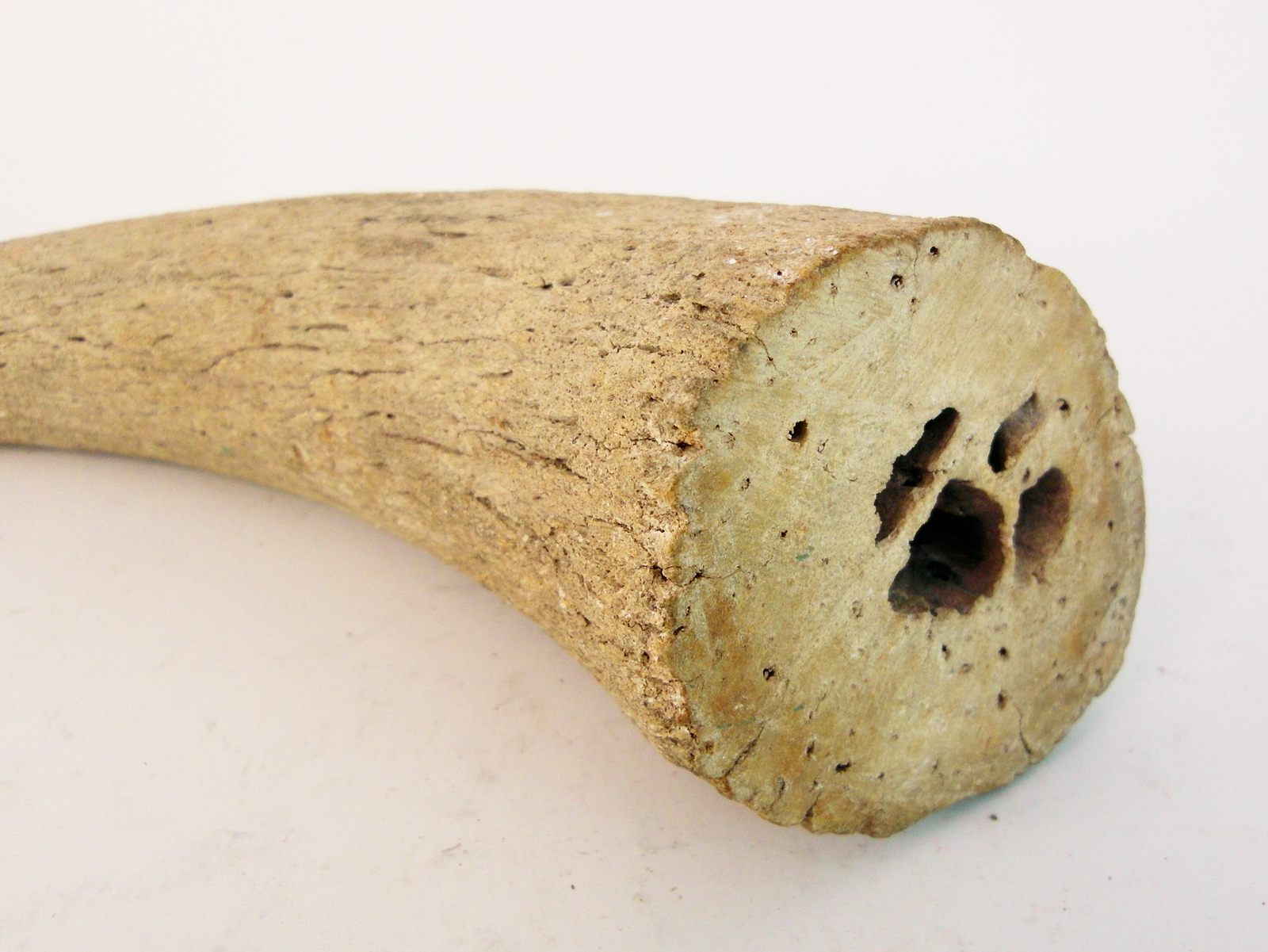
A bovine horn is a keratin sheath that grows over a bony core from the base, adding new layers year after year — hence its laminated structure. Thin at the base, it thickens toward a solid, monolithic tip, the most prized part for deep carving.
Its palette is unmistakable: soft, muted colours running from black to near white, with a semi-translucent horn mass whose layers, against the light, give each piece an unrepeatable character. No two guampas are alike.
“A horn cost no more than the work of pulling it from the carcass: a raw material once as common as leather itself.”
Traditionally, guampas are obtained at a yerra — the Uruguayan rural gathering where cattle are branded, castrated and dehorned — or from meat-packing plants. A fresh horn should dry for about two months; the bony core is removed and the horn is cured with quicklime to eliminate the smell. A horn found already dry in the field can be worked straight away.
The collection includes a series of raw and prepared horns that show the starting point of every piece in the museum.