
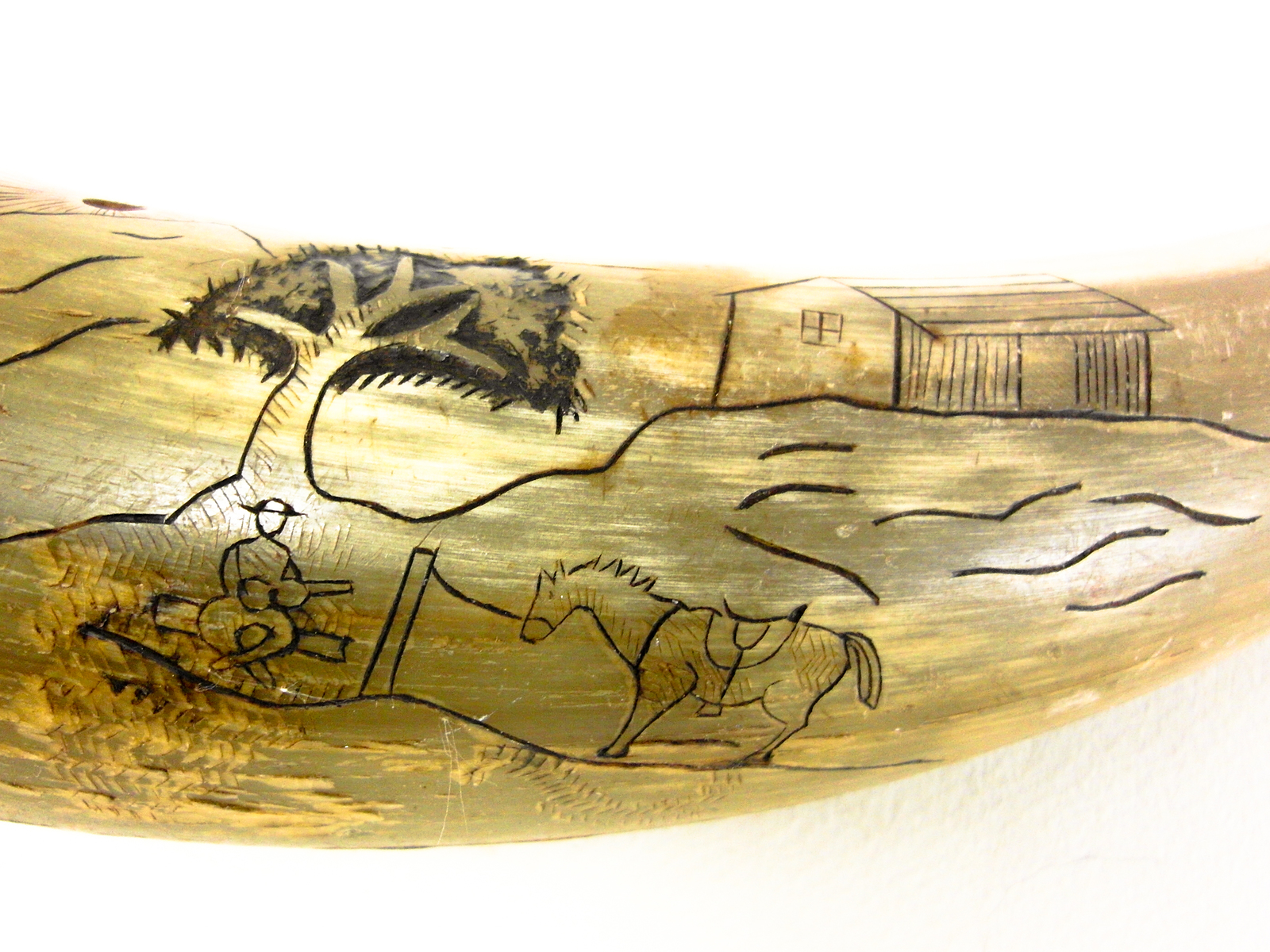
A fresh horn should be left to dry for about two months; the inner bone is removed and the horn is cured with quicklime to eliminate the smell. A horn found already dry in the field can be worked straight away.
It is cut, polished and sanded like wood: with a rasp, sandpaper or a piece of glass. The traditional shine is achieved by rubbing it with ash on a piece of leather or cloth; today polishing pastes and felt wheels are also used.
“While still warm, it is easier to draw on and carve with any pointed or sharp tool.”
To shape or carve it, the horn is softened over direct flame — taking care not to scorch it — or in hot water. It can also be flattened: boiled or heated, the horn plate is pressed between plates until it cools and keeps its shape. This is how combs, box lids, flat trays and the parts of assembled sculptures are made.
From whole horn to sculpture
There are two families of pieces: those that exploit the horn's natural form — canteens, mates, ladles, powder flasks, and the bird or fish sculptures where the curve and grain of the horn already suggest the animal — and those made from straightened plates: cutlery, combs, bracelets, boxes. The solid tip takes deep carving; sometimes hinting at eyes and a beak is enough for the creature to appear.
The most diverse objects are still made in guampa today, adapted to our times.