
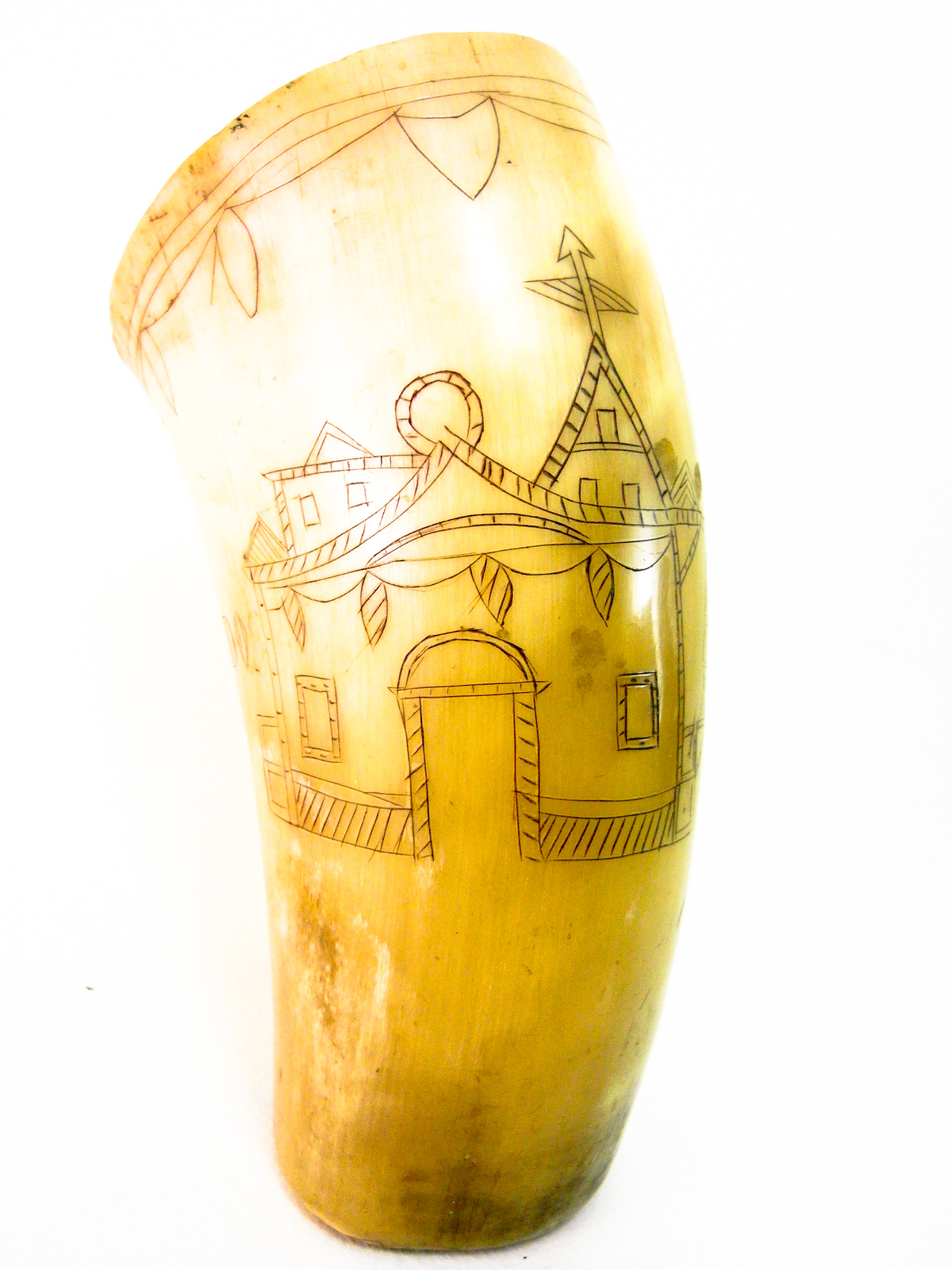
Guampa is a Quechua word for the horns of cattle. Since the earliest communities, bone and antler were used to make weapons and essential utensils: crafts in bone, ivory and horn are known from ancient Egypt, and from there they spread throughout Europe.
By the Middle Ages the trade was so well established that its craftsmen had a name of their own: the corniers (horners). The Spanish conquistadors brought these customs to the Americas, where they adapted to native cultures and acquired an identity of their own.
“For three centuries, feral cattle guaranteed an abundance of horns: a raw material once as common as leather itself.”
Cattle were introduced into the Río de la Plata basin in the 16th century; the wire fencing of Uruguay's countryside only arrived in 1870. For three centuries feral herds bred freely, favoured by climate and pasture — and that abundance guaranteed a steady supply of guampas.
In the 17th century the Guaraní were already carving spoons, tobacco boxes, combs and cups they called “mate” — the direct ancestor of the horn mate. Large horns, closed with a wooden base and stopper, became chifles: the gaucho's canteens, carried on horseback over the saddle, for water or spirits.
From tool to ornament: handles for knives and facones, bola weights, fittings for horse tack and, in time, true folk sculptures in the shape of birds, fish and ships. The finest chifles and cups were adorned with silver ferrules and engravings rich in symbolism: party emblems, the national coat of arms, episodes of local epic and scenes of country life.